

Beyond the Polygraph: The Rise of Neuroscience Forensics in the Age of the “Ghost Scam”
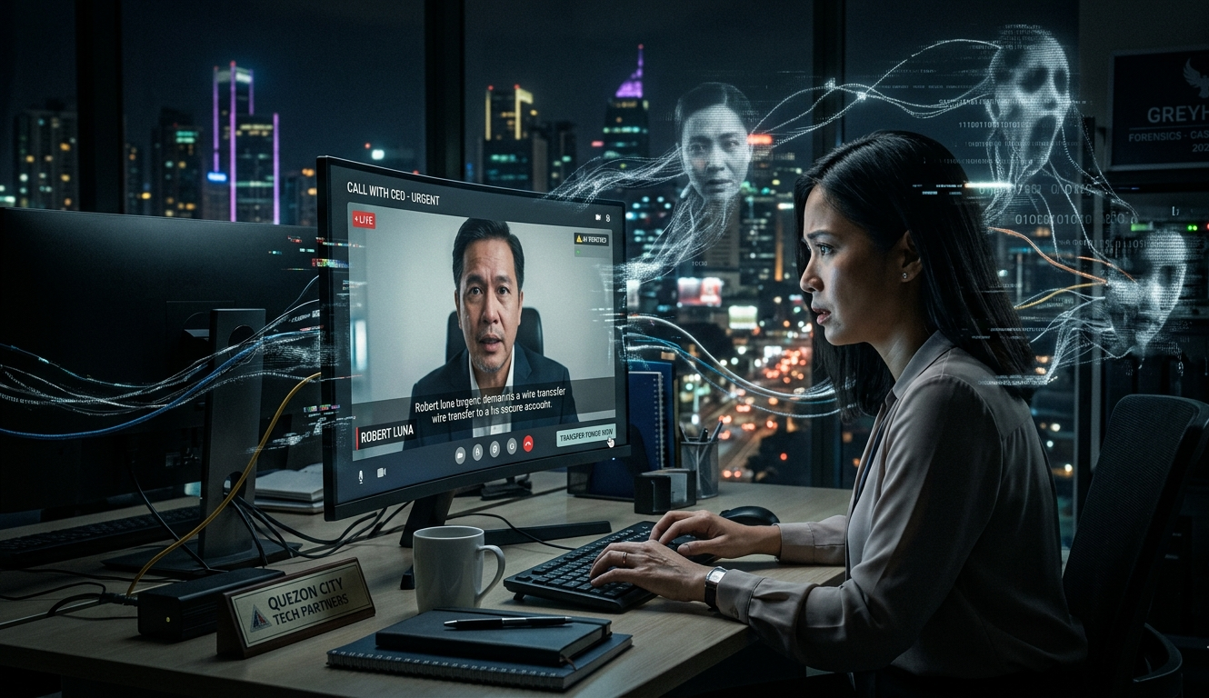
In 2026, the classic “phishing” email is a relic of the past. The latest wave of high-stakes fraud—what industry insiders are calling the “Ghost Scam”—doesn’t rely on malicious links. It relies on the absolute manipulation of human perception.
These sophisticated syndicates use real-time, AI-generated synthetic personas to conduct video calls with corporate executives, manipulating lighting, voice, and even micro-expressions to perfection. They don’t want your password; they want your trust. And when your eyes and ears fail you, where do you turn for the truth?
The answer isn’t in better firewalls. It’s in Neuroscience Forensics.
The Anatomy of the Ghost Scam
The Ghost Scam is terrifyingly effective because it exploits the human brain’s “cognitive shortcut” to trust familiar faces. During a 2026 Ghost Scam call, the victim isn’t just looking at a screen; they are subconsciously analyzing the “biological presence” of the person on the other side.
Because current deepfakes can perfectly mimic surface-level movements—blinks, lip-syncs, and head tilts—the brain often flags these as “authentic.” The scammer then presents a “time-sensitive” financial crisis, bypassing the victim’s logical defenses by inducing a high-stress “fight-or-flight” state.

The Forensic Pivot: Decoding the Brain, Not the Video
At Greyhawk Manila, we realized that if the eyes can be deceived, we must look deeper. If a video is synthetic, it lacks the biological complexity of a living human being. This is where Neuroscience Forensics changes the game.
When a human experiences stress, deception, or cognitive load (the “mental effort” required to lie), their brain emits involuntary signals that are impossible to simulate with current generative AI.
1. The P300 “Truth” Response
When a person sees something they recognize, their brain produces a distinct electrical spike known as the P300 wave. In our forensic lab, we use non-invasive neuro-imaging markers to track these responses. If a suspect claims they’ve “never seen” a specific fraudulent invoice before, their brain waves tell a different story.
2. Cognitive Load Mapping
Lying is computationally expensive for the brain. It requires simultaneous inhibition of the truth and the fabrication of a coherent lie. Our Neuro-symbolic Explainability Chains measure the precise “cognitive load” during these interactions. Synthetic personas have a “flat” cognitive profile because they aren’t actually thinking—they are executing code. A real human, under interrogation, shows complex, spikey, and evolving cognitive load signatures.
3. Remote Photoplethysmography (rPPG)
While the scammers use AI to fake the image of blood flow in the face, they cannot mimic the rhythm of the nervous system. By analyzing sub-pixel color changes in the skin, we can track heart rate variability and blood flow patterns that are governed by the autonomic nervous system. The Ghost Scam’s “actors” inevitably fail to synchronize their heartbeat to their speech patterns—a glitch invisible to the human eye, but glaringly obvious to our sensors.
The Ethical Edge: Why Transparency Matters
Neuroscience Forensics sounds like something out of a science fiction novel, which is exactly why it must be handled with extreme ethical rigor. At Greyhawk, we don’t believe in “mind reading.” We believe in Forensic Explainability (XAI).
We don’t just provide a score; we provide the “explainability chain.” We show the jury or the board of directors exactly how the cognitive load spiked, why the P300 response indicated recognition, and how the biological rhythm failed to match the synthetic video input.
The Future of Truth
The Ghost Scam of 2026 is designed to make us doubt our own senses. But while AI can mimic the human facade, it cannot simulate the human essence. By shifting our focus from the manipulated screen to the biological reality of the human brain, we are reclaiming the truth.
In the war against the Ghost Scam, the most sophisticated tool in your arsenal isn’t a password or a policy—it’s the unbreakable, measurable, and highly complex signature of the human mind.
Is your organization prepared for the next generation of synthetic threats? Learn about Hawk-Eye AI and our Neuroscience Forensic capabilities.
Disclaimer: Greyhawk Manila utilizes neuroscience-based metrics as a forensic tool for lead generation and professional investigative analysis. All applications are subject to rigorous ethical standards and should be conducted in compliance with local data privacy laws.