The fastest-growing forensic frontier—investigating crimes committed through or silently recorded by the connected systems now embedded in every home, office, and vehicle.
The concept of a “digital crime scene” has expanded far beyond laptops and smartphones. Today, every movement, conversation, and heartbeat is captured by a vast network of Internet of Things (IoT) devices. Greyhawk Manila’s IoT Forensic Lab specializes in extracting volatile, highly localized data from smart homes, connected vehicles, and surveillance infrastructure. When traditional devices are wiped or missing, the IoT environment silently holds the undeniable truth.
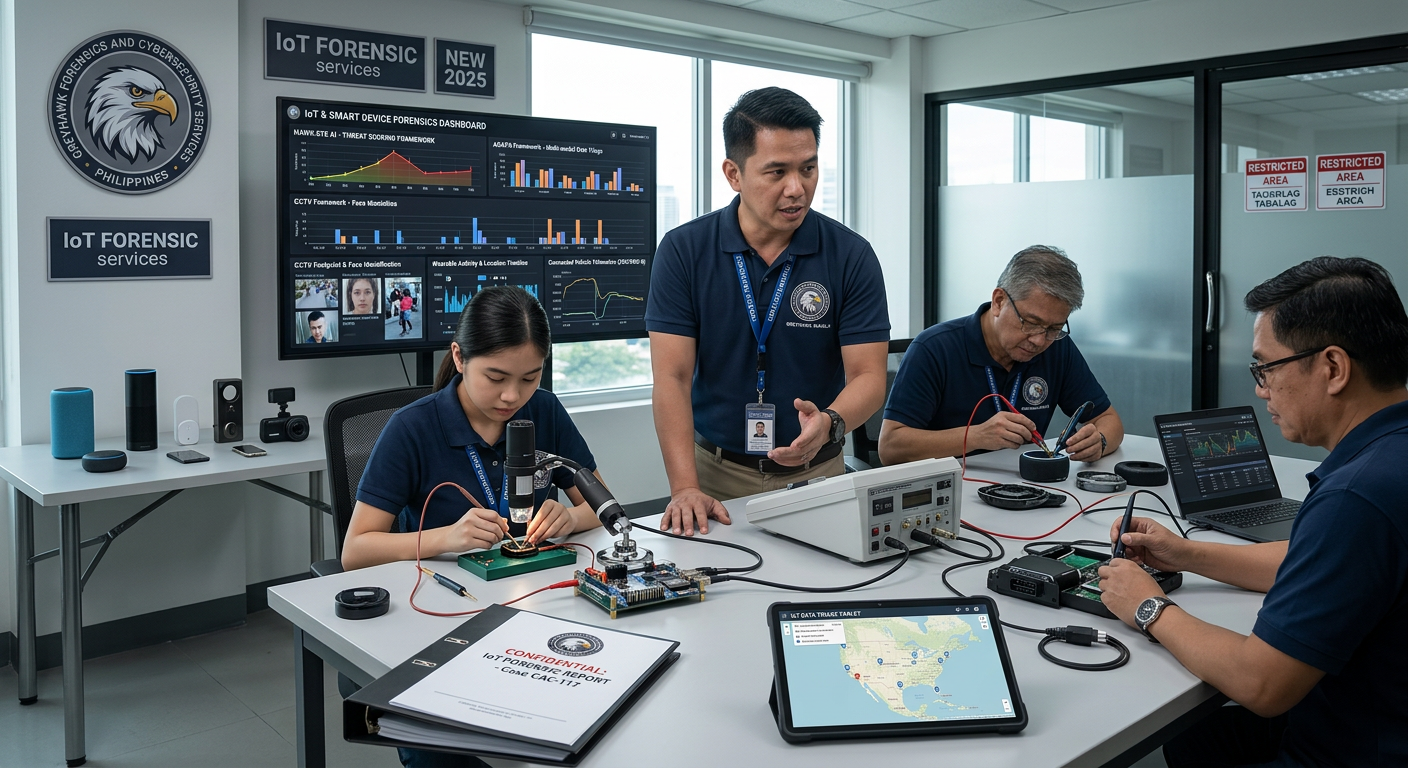
Our specialized IoT extraction methodologies uncover the hidden digital witnesses surrounding every incident.
Extracting digital evidence from smart speakers, smartwatches, fitness trackers, smart TVs, and connected appliances — devices that silently record activity, location, and voice data relevant to investigations.
Recovering digital evidence from vehicle telematics systems, dashcams, GPS devices, and connected car platforms — critical for traffic incidents, corporate vehicle misuse, and location alibi reconstruction.
Forensic recovery and analysis of CCTV footage, network video recorders, and IP camera systems — including deleted recordings, tampered timestamps, and remote access logs from surveillance infrastructure.
The devices we surround ourselves with for convenience are now the most reliable, unbiased witnesses in any investigation. Whether tracing a fleet vehicle’s telematics during a corporate dispute or reconstructing a home intrusion via smart lock logs, the evidence is there—if you have the technology to extract it. Greyhawk Manila’s IoT Forensic Lab provides the specialized hardware extraction and deep-level data analysis required to turn smart devices into undeniable proof. Do not let critical digital footprints fade into the background.
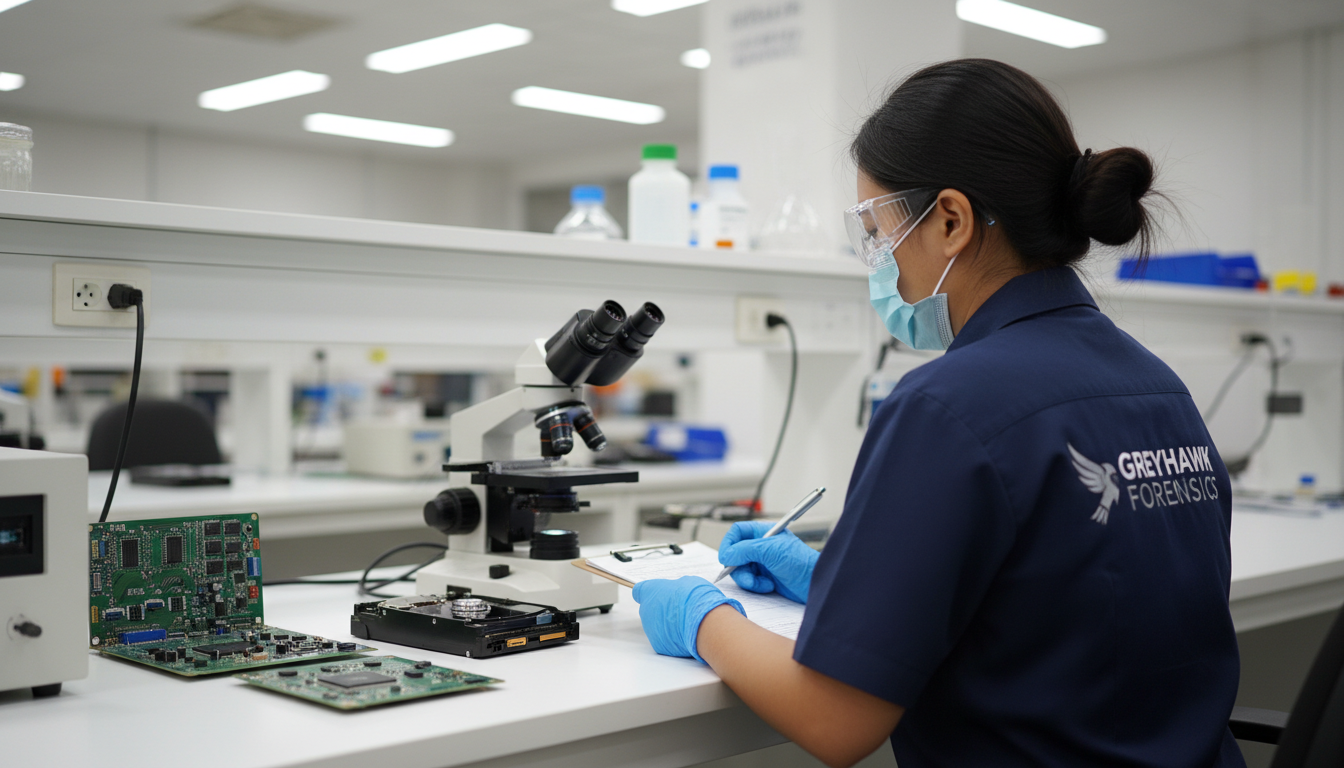
Mobile forensics focuses on standard smartphones and tablets. IoT (Internet of Things) forensics involves extracting data from non-traditional, interconnected devices—like smart TVs, Amazon Alexas, Apple Watches, vehicle GPS systems, and smart appliances. These devices often lack standard data ports and require highly specialized hardware tapping (like JTAG or ISP) to extract their memory.
Yes. Many commercial NVR/DVR systems (like Dahua or Hikvision) use proprietary, fragmented file structures. Even if a suspect issues a “format” command, the underlying video data is often still present on the disk platters until it is physically overwritten. Using deep-level file carving and hex analysis, we can frequently recover deleted video frames or the system logs indicating exactly who triggered the deletion.
Wearables provide highly accurate biometric and geospatial data. We can extract heart rate logs, step counts, and GPS coordinates. In legal investigations, a sudden spike in heart rate can indicate a physical struggle or panic, while sleep/wake cycle data is frequently used to verify or dismantle a suspect’s alibi regarding their whereabouts at a specific time.
Absolutely. Modern vehicles are essentially rolling computers. Through Connected Vehicle Forensics, we extract data directly from the car’s Engine Control Unit (ECU) and OBD-II ports. We can recover pre-crash telematics—including vehicle speed, hard braking events, steering angles, and seatbelt status—which is critical for resolving corporate fleet disputes or traffic litigation.
For logistics and ride-hailing disputes, we perform deep application forensics on the smartphones involved. We extract cached GPS breadcrumbs, precise pickup/drop-off timestamps, internal chat logs between the driver and customer, and payment metadata, allowing us to completely reconstruct the timeline of the ride or delivery.
Smart speakers constantly buffer ambient audio while listening for their “wake word.” Even if they do not actively transmit a full conversation to the cloud, forensic extraction of the device’s internal flash memory, coupled with analysis of the user’s companion smartphone app, can reveal fragmented audio logs, motion sensor triggers, and exact timestamps of when people entered a room.
Whether you are investigating a corporate fleet accident, a home intrusion, or complex corporate espionage, the IoT ecosystem has recorded the event. Do not let critical evidence vanish from the cloud or be overwritten by the device. Partner with Greyhawk to extract the silent witnesses.
Disclaimer: Greyhawk Forensics and Cybersecurity provides expert technical extraction and analysis of IoT devices, telematics, and surveillance systems. We are not a law firm. While our forensic methodologies are designed to adhere to global standards (such as ACPO guidelines) and the Philippine Rules on Electronic Evidence (REE), the final admissibility of biometric, telematic, and IoT-derived evidence is determined by the presiding judicial authority. We highly recommend consulting with your retained legal counsel on the integration of IoT forensic reports into your specific legal proceedings or corporate disciplinary actions.